




Integrating sustainability into commercial property renovations makes transformations increasingly involved. Ben Tiffany, building services director at Sigma, explores how an end-to-end solutions provider can deliver a sustainable renovation project that supports organisations meet Environmental, Social, and Governance (ESG) targets and align with Net Zero goals.
The value of a single partner
There are high expectations for modern renovation projects. Buildings are required to be attractive and functional, energy efficient and sustainable, and equipped with intelligent infrastructure, such as Building Energy Management Systems (BEMS), sensors and smart controls.
Achieving all these goals on time and within budget can be challenging when juggling multiple contractors. In contrast, a single solutions partner, especially one that has expertise in delivering sustainable projects, can result in better outcomes.
With a complete understanding of a project and a micro perspective of the details, these partners can build projects from the ground up, ensuring all requirements are met, while streamlining overheads and removing unnecessary work and cost duplication.
Not only does a single partner make communication easier and give clients full visibility; it also simplifies project management, averts delays and accelerates completion. At the same time, internal SHEQ teams eliminate risk and ensure compliance with safety and environmental regulations.
Sustainability expertise
Another advantage of an end-to-end provider is that its centrally managed dedicated business units handle every phase of the project, from design and planning to installation and inspection. Through ongoing benchmarking, these teams can reduce costs, improve efficiency, add value and deliver commercial competitiveness. Crucially, they can also enhance sustainability.
By honing design, eradicating inefficiencies and improving operations, teams can reduce waste, increase energy efficiency and extend life cycles. Indeed, when combined with BEMS integration, buildings become greener, less costly to run and require less maintenance.
A single provider can integrate sustainability into every aspect of a project. With a strategic approach that considers the client’s ESG goals, the property’s details and energy usage, compliance demands and budget, they will consider the most appropriate solutions for the project.
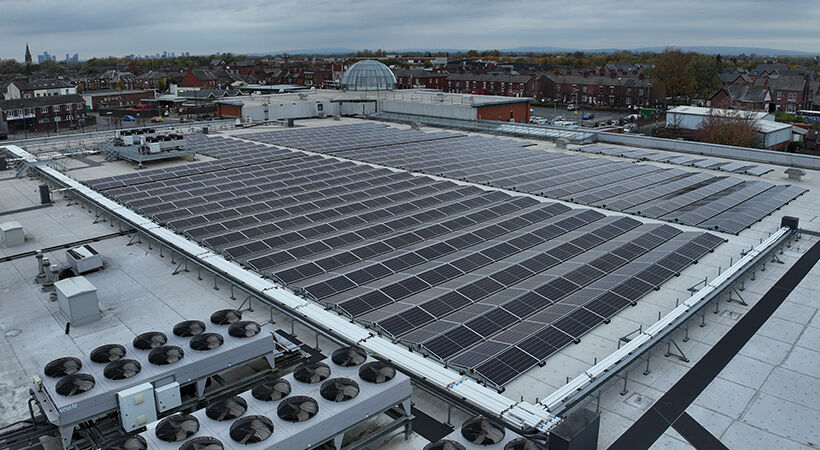
Upgrades can include the replacement of inefficient gas boilers and heat pumps, and the installation of solar panels, LED lighting, smart battery management systems, HVAC systems and energy-efficient refrigeration with low global warming potential (GWP). The addition of intelligent controls and automation, together with improved insulation, can reduce waste and maximise efficiency even further.
Sustainability also extends to Goods Not For Resale (GNFR). For instance, by handling design, testing, procurement and logistics, the provider can ensure bespoke-designed goods are built using sustainable materials and manufacturing processes, while pre-planned delivery routes can reduce fuel consumption and emissions. Moreover, by refurbishing or recycling old fittings through consolidation centres, these experts can support the circular economy and reduce landfill.
Sustainable renovation – a case study
A recent example of an end-to-end solutions provider delivering a sustainable renovation was a project for a well-known UK retailer at a store in Fulham, London. Wishing to develop a future-focused retail environment, the client required the outdated supermarket site to undergo a full, top-to-bottom transformation. The renovation included a new food-led format with upgraded cold-chain rooms, refrigeration and back-of-house infrastructure.
With a sustainable approach that focused on reducing energy demand, improving airflow efficiency, and enabling smart monitoring, the store’s ventilation system was upgraded including new ducts and enhanced airflow systems. Additionally, the store was fitted with full LED lighting, and the upper floor was fully refurbished.
The complex nature of the project required a full end-to-end service, involving all the provider's business units.
Handling design, planning, budgeting, compliance and procurement, including sustainability requirements, the provider’s Project Solutions & Building Services team was responsible for the physical transformation, installation and M&E work. Meanwhile, the Logistics team managed kit movement and recycling.
The project involved close collaboration not just with the site manager, but also with the local council, schools and community groups. Indeed, this led to CSR activities, including school visits, presentations and local housing initiatives.
Completed on time and within budget, the store is now fully refurbished and operational, and new jobs have been created.
The provider also conducted waste-reduction and recycling activities, including using some refurbished equipment from other projects.
For architects, developers and facility managers, there are considerable advantages to working with a single, end-to-end solutions partner on sustainable renovation projects. Such partnerships allow projects to be customised to clients’ needs, while ensuring they meet ESG goals, and are delivered within timescales and on budget.