




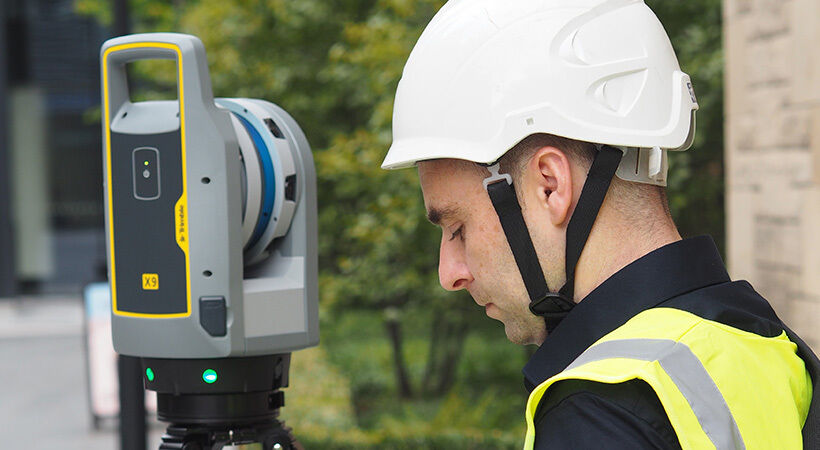
Matthew McQuillian, digital measured surveys lead at Egis UK looks at making the right decisions at the right time.
At the very start of a construction project, critical decisions are often made under significant time and budget pressure, with limited opportunity to consider how they will influence outcomes further down the line. Among these initial choices, geospatial survey procurement is frequently treated as a procedural step, despite its considerable impact on design certainty and overall project risk.
These surveys capture the geometry of land and existing structures, creating accurate spatial data that supports early site assessment, design development and compliance. Most importantly, they identify the physical constraints of a project and establish a reference point for the decisions that follow.
Surveys are typically commissioned early to enable design activity to progress and, when properly specified, can provide a robust foundation for the entire project. However, at this stage the focus can lean heavily towards speed and cost rather than how the information will support design development over time. That balance matters because the quality and suitability of survey data directly affects confidence in design decisions, the management of project risk and the likelihood of rework once construction is underway.
As projects become more complex and expectations around certainty increase, the way surveys are defined and procured at the outset carries greater weight than is often recognised.
Far from being a routine technical exercise, survey procurement plays an important role in shaping design development and informing how project risk is understood and managed. While surveys are sometimes viewed as a preliminary input, they are, in reality, a key part of project strategy, with many downstream risks influenced by decisions made at this early stage.
Advances in surveying technology have significantly improved efficiency and made high-quality data capture more accessible. At the same time, these developments have created greater variation in service levels and outputs, increasing the need for professional input and oversight to ensure information can be relied upon.
The benefits of getting this right become increasingly clear as projects progress, particularly when design teams depend on survey information to coordinate detailed and often highly interdependent work. Well-defined and appropriately scoped data provides clarity and supports smoother collaboration between disciplines. Equally, when limitations are clearly understood from the start, teams are better equipped to apply information correctly and avoid unnecessary redesign later in the process.
The quality of survey information is closely linked to the competence and accountability of those producing it, making professional standards a crucial consideration in procurement decisions. Engaging surveyors who are members of recognised bodies such as the Royal Institution of Chartered Surveyors provides assurance that work is delivered within established professional and ethical frameworks.
Alongside technical delivery, experienced survey professionals add value by helping define what needs to be measured and clearly setting out any limitations in a way that supports informed decision-making across the project team. Early clarity of this kind is often just as important as the data itself.
Once scope is established, attention naturally turns to accuracy, which is most effective when aligned with how the information will ultimately be used. Different stages of a project require varying levels of precision, and recognising that from the outset helps ensure survey work is both efficient and genuinely fit for purpose.
Challenges typically arise when information captured for early design stages is later used for detailed coordination or construction decisions without full consideration of its original intent or limitations. In those situations, even small discrepancies can lead to redesign, delays and additional cost once work reaches site, often outweighing any initial savings made during procurement. A clearer definition of accuracy at procurement stage helps ensure survey data remains reliable and appropriately applied throughout the project lifecycle.
As the construction sector continues to prioritise cost efficiency and programme certainty, early-stage decisions are playing an increasingly influential role in shaping successful outcomes. This is particularly evident in projects involving existing assets, where risk is inherently higher and reliable information is essential to managing uncertainty.
In that context, well-produced geospatial surveys help establish design certainty and provide a clearer understanding of project risk from the outset. When properly scoped and procured, they create a reliable foundation that design teams can build on with confidence as projects progress through delivery. Viewed in that light, survey procurement becomes far more than a technical starting point and instead represents a strategic decision that influences the success of a project as a whole.