




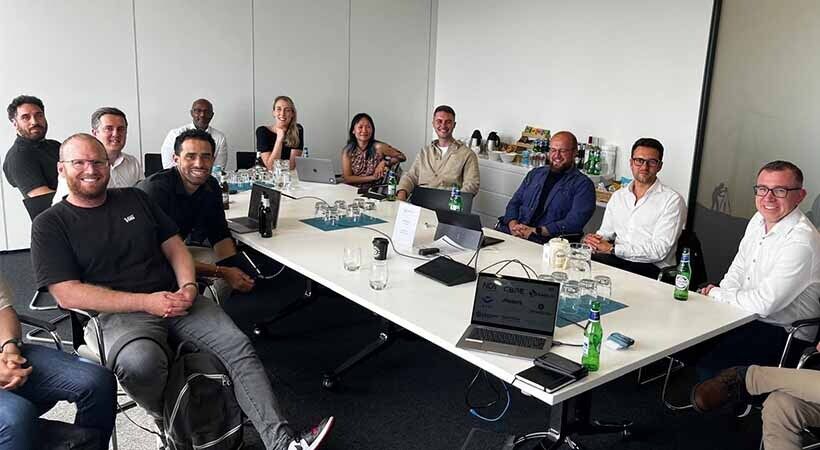
The NDY round table group is an independent forum held quarterly established and chaired by Tom Michael and Conor Cleary at NDY, designed to facilitate discussions among industry leaders. This collaborative platform aims to bring together diverse perspectives and expertise, fostering insightful open dialogues that address the evolving challenges and opportunities within the smart building sector.
The first session kicked off with a focus on financial incentives and subsidies related to smart building implementation. Participants acknowledged that while large developers are keen on maximizing revenue, they also recognise that user experience is key. The conversation revealed how various stakeholders perceive real estate differently; what benefits one group may not satisfy another.
A standout point was the challenge of measuring productivity and performance in this complex landscape. The discussion underscored the need for effective KPIs that accurately reflect financial performance, sustainability, and operational efficiency. It was unanimous that we must rethink how we gather and analyse data, keeping in mind the unique challenges presented by each building's usage and the varying needs of landlords and occupiers.
Round table two explored the Occupier versus Landlord dynamic regarding smart building technologies. A consensus emerged that tenant agreements often dictate how much "smart" functionality tenants can access—sometimes merely allowing them to observe rather than control their space.
Landlords are beginning to see the value in smart technology but are still navigating how to implement it effectively, often resorting to quick solutions that may like flash but lack depth. The session highlighted the importance of a unified approach, where facility management teams serve as integrators across different agendas and interests.
The discussion turned to building performance metrics and the transition from construction to daily management, emphasizing the need for plans that ensure continuous performance alignment with smart building goals.
In the final session, the group discussed AI and the broader implications for real estate. While many see AI as a game changer, there remains a significant gap in trust and understanding about how it can be effectively utilised. This led to a conversation about the importance of data accuracy and the learning curve many users face when adopting new technologies. The AI models will only run on the data that it is fed. For AI to be effective the data sets that the building generates must be accurate to garner genuinely useful insights. This is a key hurdle to AI adoption at large scale.
Participants emphasised that transforming AI into meaningful applications is a gradual process that should prioritise simplicity and enhance existing workflows rather than overcomplicate tasks due to the risks of getting AI wrong. These impacts can include tainted perception, impact to tenants and rejection of technology adoption.
Discussion also revealed that metrics for assessing AI performance need to move beyond basic outputs to include user experience and satisfaction. As we look forward, collecting operational data—especially user feedback—will be crucial in ensuring that tech genuinely serves people's needs.
The final topic centred on the pathway to net-zero and the role of the ‘carbon cost’, moving away from solely thinking about metering and capturing the wider implications of building operation such as food and consumable waste.
As our round tables gain traction, it is evident that input from a diverse range of industry professionals is key to understanding common challenges and progressing smart building adoption. Open discussion is key and collaboration is the only thing that will successfully drive the industry forward.
Attendees to date:
- CBRE Google
- Kode Labs
- VTS
- Meterz
- Nexus Labs
- Designer Group
- Learnd
- Hereworks
- WiredScore
- Derwent London
- XY Sense