




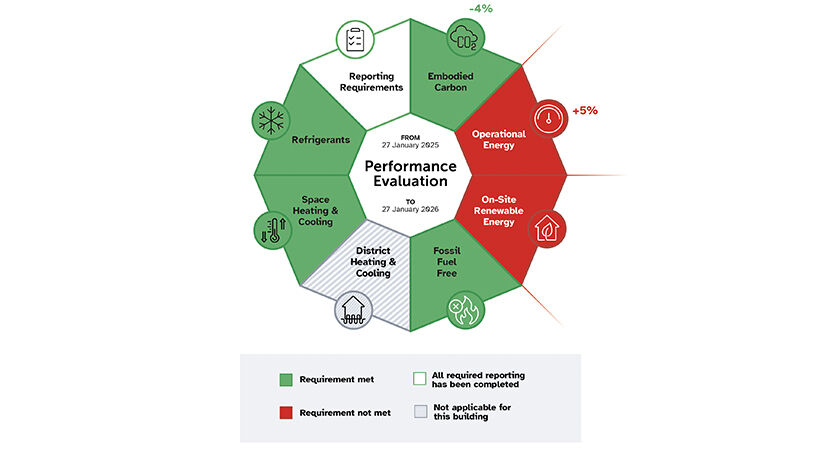
UK NZCBS Performance Evaluations will enable buildings to verify performance against the Standard’s requirements, even if they are not meeting all of them.
The UK Net Zero Carbon Buildings Standard Version 1 (the Standard), published March 10th, robustly defines what a building needs to do to be Net Zero Carbon Aligned in the UK. The Standard’s limits are based on the UK’s carbon and energy budgets: all of its requirements must be met and verified to achieve conformity. Buildings that don’t meet all the requirements cannot claim to be Net Zero Carbon Aligned. Not all buildings will be able to meet the Standard straight away, so it is important to upskill the industry and support plans for buildings to conform in future: UKNZCBS Performance Evaluations have been created to address this need.
The mission of the Standard is not just to create a definition, but also to drive market transformation towards net zero carbon and create consistency within the industry.
In pursuit of these goals, a separate Performance Evaluation designation is being introduced, allowing buildings to be evaluated against the Standard’s requirements, where they are not able to meet all the requirements to be Net Zero Carbon Aligned. Launching at the same time as the Standard’s verification in Q2 this year, UK NZCBS Performance Evaluations will require the same level of verification as for a Net Zero Carbon Aligned claim, and the output will provide a robust indication of how the building is performing across different aspects of the Standard’s requirements.
While not the same status as being Net Zero Carbon Aligned, a verified Performance Evaluation acts as a “report card” for the building, using the same metrics and measurements. They also show how closely a building performed against the applicable limits in the Standard. This represents an important step on a building’s decarbonisation journey, both through reporting of in-use performance, and following the process: learning to measure and assess performance against the Standard, and to access and understand the relevant data.